



FTX Founder Sam Bankman-Fried Reflects on His Mistakes Four Years After the Collapse
FTX founder Sam Bankman-Fried discusses the exchange's collapse, his past mistakes, and charitable initiatives in a prison interview.
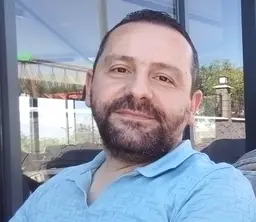

Sam Bankman-Fried (SBF), founder of the bankrupt cryptocurrency exchange FTX, has reflected on the company's collapse in an interview published on November 20, 2026. Speaking from prison with 14-year-old podcaster Eli Goldfine, Bankman-Fried acknowledged that he could not confidently argue that the benefits of FTX's philanthropic activities justified the company's disastrous ending. The former executive suggested that different decisions during the exchange's final stages might have changed the outcome. His remarks have renewed attention on the financial damage suffered by investors and customers following FTX's collapse in November 2022.
What Did Sam Bankman-Fried Say About FTX's Collapse?
During the interview published by The Supercycle, Eli Goldfine asked Bankman-Fried whether the charitable work conducted through the FTX Future Fund had made the exchange's rise and fall worthwhile.
Bankman-Fried responded that he wished he could view the outcome positively but could not honestly reach that conclusion. He suggested that, had he avoided mistakes toward the end of FTX's operations, he might have viewed the company's overall legacy differently.
Another notable aspect of his remarks concerned decision-making during periods of crisis. Bankman-Fried argued that people might eventually draw different conclusions about FTX if they learned what he considered the appropriate lessons from its failure.
He maintained that receiving poor advice becomes particularly easy during a crisis, while individuals can lose sight of their priorities. He also suggested that subsequent interpretations of events may become distorted by the perspectives of those who ultimately prevail.
However, Bankman-Fried's personal interpretation does not alter the findings of the criminal proceedings against him. His account of the company's final months remains his own assessment of events.
FTX Future Fund and Philanthropic Activities Return to the Spotlight
A substantial portion of the interview focused on the FTX Future Fund, which supported initiatives related to artificial intelligence safety, biological risks, and research intended to generate long-term social benefits.
Bankman-Fried described efforts to reach researchers and entrepreneurs through smaller grants. According to his account, the initiative aimed to support promising projects that might have struggled to secure funding through conventional channels.
He also discussed FTX's investment in Anthropic, explaining that AI safety considerations partly influenced the decision. Importantly, he clarified that the Anthropic investment preceded the establishment of the Future Fund itself.
FTX's historical investments have continued attracting attention since the company's bankruptcy. An earlier Kriptofoni analysis of FTX's Anthropic and other investments examined hypothetical valuations the assets might have reached had they remained in the company's portfolio.
The Future Fund's operations were directly affected by FTX's collapse. Its management team resigned in November 2022, announcing that it could no longer continue its work.
The 25-Year Prison Sentence in the FTX Fraud Case
FTX filed for bankruptcy in November 2022 following a financial crisis. Subsequent investigations and criminal proceedings established that customer funds had been improperly used, including through activities involving Alameda Research.
According to the US Department of Justice, Bankman-Fried received a 25-year prison sentence on March 28, 2024, for fraud and related offenses. The court also ordered forfeiture exceeding $11 billion.
The conversation with Goldfine was recorded through prison telephone calls on November 14 and 15, 2026, before being released on November 20.
Kriptofoni Assessment
Bankman-Fried's latest remarks provide insight into how he currently interprets the decisions that preceded FTX's collapse. Nevertheless, acknowledging mistakes is not equivalent to accepting full responsibility for the fraudulent activities established during his criminal trial.
The central issue in the FTX case extends beyond whether certain investments or philanthropic initiatives eventually generated value. Financial institutions have fundamental obligations to safeguard customer assets, maintain transparency over the use of funds, and implement effective risk management.
Consequently, potential social benefits arising from projects supported by the Future Fund cannot be treated as compensation for the damage caused by the misuse of customer funds.
The interview ultimately raises a broader question for the cryptocurrency industry: the success of a financial enterprise should be judged not only by its growth and investments but also by the financial controls and governance standards supporting that growth.
Spotted an error? Let us know · Our editorial standards
Disclaimer: This content is for informational purposes only and is not investment advice. Cryptocurrencies are high-risk; make investment decisions based on your own research.
Content Editor and Writer
Dr. Mesut İnan is a researcher, academic, and cryptocurrency journalist. Producing content in the cryptocurrency space since 2018, he combines his expertise in sociology with the crypto ecosystem to bring an original and analytical perspective to the industry. Prior to joining Kriptofoni in 2024 as a co-founder, content editor, and writer, he served as an editor and writer across various cryptocurrency media platforms. Authored "Bitcoin Sen Bizim Her Şeyimizsin"—a book dedicated to Bitcoin that makes a meaningful contribution to the ecosystem—İnan is recognized among prominent figures in national and international cryptocurrency journalism through his academic background alongside regular analysis, reporting, and commentary. Continuing his work as an author and educator, Dr. Mesut İnan remains a prominent voice in the cryptocurrency sector, contributing ongoing insights to the field.
All articles


